

Industry Insights

Updated papers from the people building the next civil workforce.

Fresh thinking on government tenders, social procurement, psychosocial WHS, AI on the tools and the second-chance employment pipeline that is reshaping Australian infrastructure.

In The News
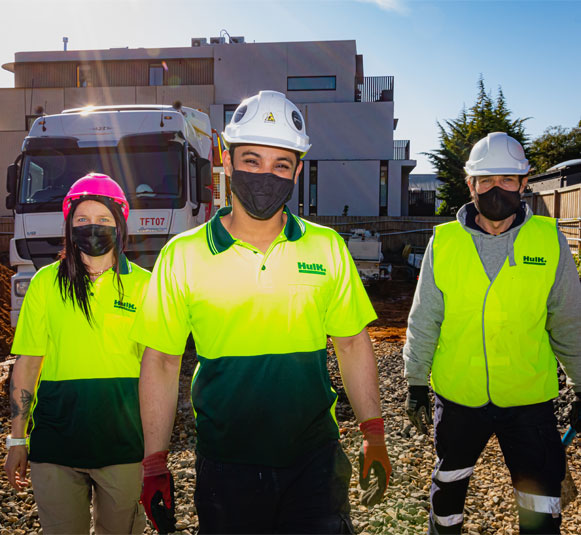
Hulk Labour Hire crew on a Malvern civil site
The Community Forum · Feature

Hulk Labour Hire Services: Delivering Reliable Workforce Solutions in Malvern

The Community Forum profiles Hulk's Malvern operation — covering the crew's reliability on civil packages, the company's fair-go hiring philosophy, and the relationships with tier-1 contractors that underpin its growth across Melbourne's inner south-east.

Read the article ↗thecommunityforum.com.au
Hulk crew on siteHulk hoodie on a Melbourne rooftop
Government Tenders

Unlocking Government Tenders via Next-Generation Second-Chance Employment

Stuart HolmesFounder & Program Lead, The Green Collar·June 2026·6 min read

Victoria's Social Procurement Framework has teeth in 2026 — and labour hire firms that can prove social value are winning civil packages on more than rate alone.

In the current Australian procurement landscape, winning State and Federal Government infrastructure tenders requires more than a competitive rate. Frameworks like Victoria's Social Procurement Framework (SPF) and the Federal Social Sustainability Guidelines now mandate verifiable commitments to social value, with explicit weighting toward priority cohorts including justice-impacted Australians.

Tier-1 contractors face three structural friction points trying to fulfil these obligations internally: psychosocial risk under the 2026 WHS amendments, attrition inside the critical 12-week post-release window, and an absence of auditable outcome data that procurement panels can defend.

A specialist intermediary like The Green Collar de-risks all three. Lived-experience mentors stabilise candidates before placement, group checkpoints catch issues early, and outcome data flows back to the head contractor as defensible evidence. For Hulk, that converts a compliance hurdle into a commercial moat.

Procurement panels no longer reward heads on site. They reward auditable social outcomes — and that is a market Hulk can own.
WHS & Compliance

Psychosocial Hazards on Civil Sites: What the 2026 Amendments Mean for Labour Hire

Dr. Priya AnandWorkplace Health Strategist, SafeBuild Advisory·May 2026·5 min read

The updated WHS Regulations make psychosocial safety a board-level issue. Here is what site supervisors and labour hire providers need on the ground from week one.

Since the 2026 amendments commenced, principal contractors are legally accountable for identifying, assessing and controlling psychosocial hazards across every worker on site — including labour hire and subcontracted crews. The duty is non-delegable.

On civil projects, the highest-frequency hazards are role overload during mobilisation, exposure to traumatic events such as serious near-misses, and bullying or exclusion of new starters. Labour hire providers who arrive with a documented onboarding script, a named welfare contact and a same-day escalation path materially shrink the principal's exposure.

The most common gap I see in audits is not the absence of policy — it is the absence of evidence. A simple, time-stamped check-in log from a peer mentor is worth more in a regulator inspection than a 40-page framework no one on site has read.

If you cannot show a documented psychosocial control on Monday morning, you cannot show due diligence on Friday afternoon.
AI & The Workforce

Vibe-Coding the Trench: How Generative AI is Reshaping the Civil Workforce

Marcus WhitfieldDirector of Innovation, Future Infrastructure Lab·April 2026·4 min read

The barrier to technical roles has collapsed. Resilient, lateral-thinking workers — including those returning from incarceration — are now the natural operators of on-site AI tools.

Generative AI has dismantled the assumption that technical site roles require traditional academic credentials. Natural-language interfaces over asset tracking, materials logistics and inspection workflows mean the binding skill is now resourcefulness, not syntax.

That reframes the talent pool. Workers with lived experience of constraint — including justice-impacted candidates — consistently demonstrate the lateral problem-solving that AI tools reward. Pair them with structured throughcare and they outperform on retention metrics that head contractors actually track.

Forward-leaning labour hire providers are already piloting on-site AI copilots for daily diaries, SWMS generation and toolbox talks. The providers that win the next wave of civil packages will be the ones whose crews can operate those tools fluently on day one.

The civil worker of 2027 will speak to a model the way the civil worker of 1997 spoke to a two-way radio.
Second-Chance Employment

The Fair-Go Economics of Second-Chance Crews

Jess TomlinSenior Policy Analyst, Justice Reform Collective·March 2026·5 min read

Recidivism costs the Australian taxpayer billions. Employers who provide structured second-chance work are not doing charity — they are running the most defensible ROI in the labour market.

Productivity Commission modelling puts the average annual cost of a single incarcerated adult above $130,000. Stable employment in the first 12 months post-release reduces re-offending risk by more than 30 percent across multiple longitudinal studies.

The economics for the employer are equally strong once attrition is controlled. Crews supported by lived-experience mentors and peer check-ins record retention rates competitive with — and often above — general-pool labour hire on equivalent civil packages.

Procurement is catching up. State frameworks now translate documented second-chance placements into evaluation weighting on civil tenders. The employers showing up with audited evidence, not aspirational policy, are the ones converting that weighting into contract wins.

Every retained second-chance placement saves the public purse more than it earns the employer. Both numbers are positive.
Want crew on a tendered package?

Talk to us about your next civil contract.

Request a Crew →